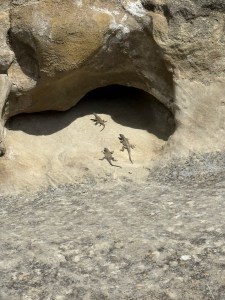
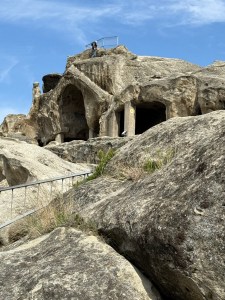
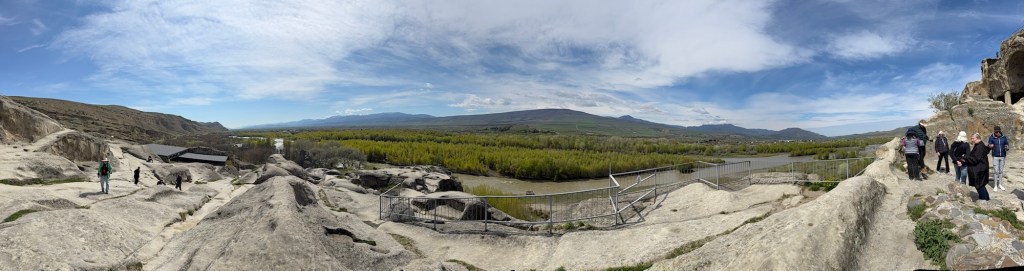
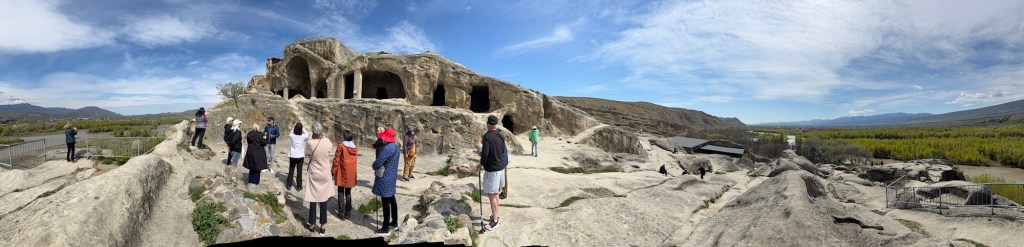
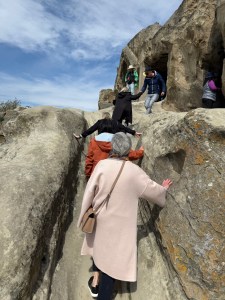
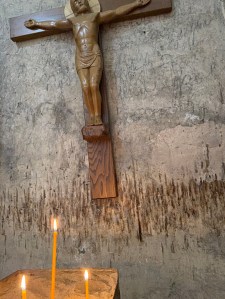
We headed out of town to a cave city. Access to the city was very non friendly for Connie so she stayed near the entrance. This is the ancient city of Uplistsikhe. Built on a high rocky left bank of the Mtkvari River, it contains various structures dating from the Early Iron Age to the Late Middle Ages, and is notable for the unique combination of various styles of rock-cut cultures from Anatolia and Iran, as well as the co-existence of pagan and Christian architecture. The earliest traces of human presence in Uplistsikhe date back to the end of the 2nd millennium BC. Its earliest remaining structures are from the beginning of the 1st millennium AD. The complex had been very large during the height of its glory. Eventually other cities became more important.
Local residentsPart of cave cityView from cave cityMore cave citySome of easy terrainEven moreSnide chapel
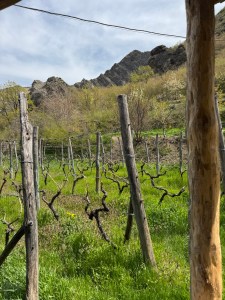
Lunch today was at a family run winery. Wine is a major product here just as in Armenia. We had to leave the bus and be taken by 4-wheel drives. After seeing the road it was obvious the bus would not have made it. The farm has fruit trees as well as the grape vines. Lunch is in a large room with two big tables. How Gate One found this place we have no idea. Once again the quantity of salads left little room for the main meat course. The other problem is the amount of time to prepare the meat. It consistently seems like they don’t start cooking the meat until the salads are done.
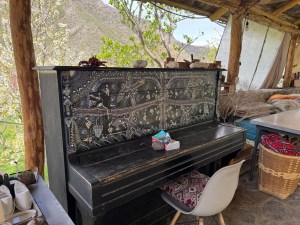
Vineyard for lunchPiano at lunch stop
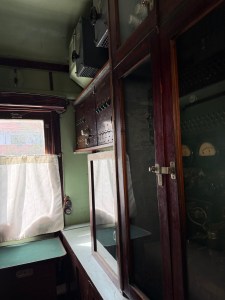
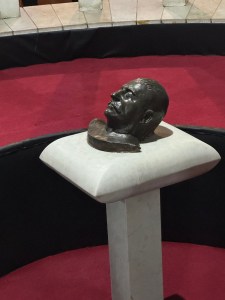
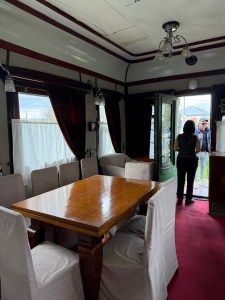
After lunch we visited the Stalin Museum. He was born in Georgia but never returned after going to Russia. His childhood home is very near the museum and is undergoing restoration work. The rail car he traveled in was also there. He didn’t trust doctors so when he fell ill, doctors were not allowed in to see him until he had passed. So he killed millions of people and probably killed himself. Another strange leader.
Inside Stalin’s rail car Stalin’s death maskInside Stalin’s rail car
Dinner this evening is on our own. Rob found a grocery store and bought cup of soup type noodles we could do in the room. We have eaten so much food that a light meal is good.
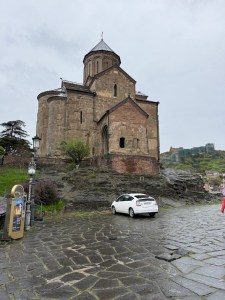
We start with a short bus ride to one of the city’s famous churches Metekhi. Much of the existing structure dates back to the Middle Ages and was built between 1278 and 1289 AD under the reign of King Demetrius II of Georgia, although oral tradition traces Metekhi’s origins further to the 5th century. Following a tradition in Georgian architecture of harmonious relationship of temples with the surrounding natural landscape, Metekhi Church was built to look like a growing continuation of the cliff, visible from many city points.
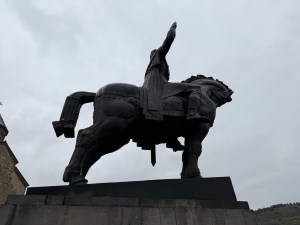
Statue of King Vakhtang I
Very close is the statue of King Vakhtang I Gorgasali, the 5th-century founder of Tbilisi. He sits on his horse. The statue is visible for quite some distance.
We next visited the National History Museum. The two most popular areas are the gold room and the Soviet Occupation. Both were interesting but not amazing. The Soviet Occupation was a very dark room.
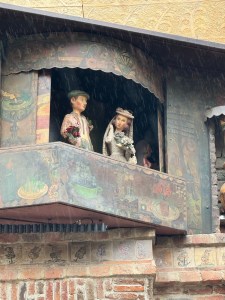
Puppets?
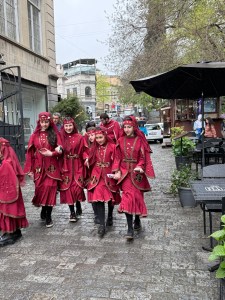
We drove to the old city and started a walking tour in the rain. A short distance in we all stopped to watch a puppet show. The puppet show was to be in an opening in a small clock tower. The entire thing looked like a fancy cuckoo clock. Shortly after noon the doors opened and two figures were there. They moved out of the window and two others appeared. Then the doors closed. They were not puppets something more like dolls. What a disappointment. The buildings here are interesting and often unusual shapes. On our way back to the row of restaurants a group of children and a few adults dressed in native costume headed for one of the churches. A priest from that church had recently passed and this was part of a ceremony. Lots of cameras everywhere.
Native dress
Lunch was on our own today but we ate where most of the folks including our guide did. We ate food closer to home. Connie had an interesting ice tea drink. Ice might not have been the best choice.
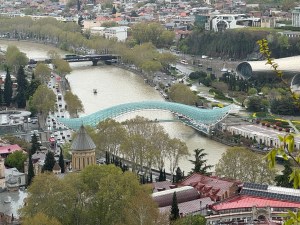
Peace Bridge
After lunch we walked to the cable car via the Peace Bridge for a ride to the top of the hill. You could see much of the city from there. The place was popular with the locals too. On up the hill was the statue of Mother Georgia.
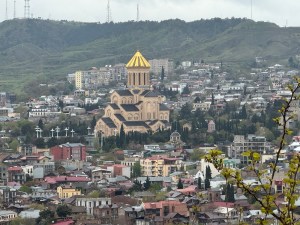
Some church as seen from hill
Back to the hotel for a short free time before going out for dinner. Almost all of the businesses accept credit cards. We did get some local currency from ATM’s for small purchases and access to toilets.
Day 8 April 20, 2026 Dilijan Armenia to Tbilisi Georgia
We drove on into the town of Dilijan for a short walking tour of the town center. We saw a woodworking shop and a ceramic studio. The town is on hills so virtually everything is up or down. Nice place.
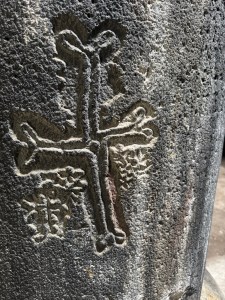
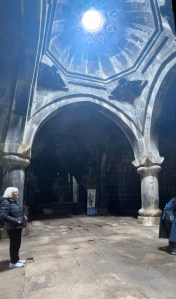
Inside the monastery chapelSimple crossAnother room
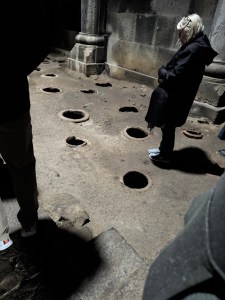
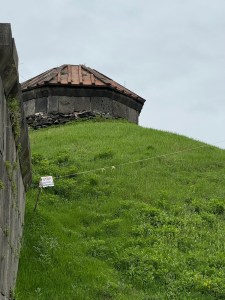
Our final Armenian site was the medieval Haghpat Monastery complex, a UNESCO World Heritage Site that doubled as a major center of learning in the Middle Ages. They had a library, outside work area, storage for food and wine. The monastery was constructed between the tenth and thirteenth centuries. The storage area was underground because the sides and top were covered with dirt and grass. Odd though because you entered without going down.
Holes to store clay pots of food or wineRoof of food storage roomCouple of grave stones
A short drive later we were at our lunch stop. This would be the farewell lunch as we will soon cross the border into Georgia. Sorry to leave our guide and driver behind. They were both so good.
Some thoughts about Armenia: lots of buildings still reflect the Soviet Era but they are working to remove it. Their election in June will greatly influence their next direction. One of the main candidates is pro Russian. The country has been controlled by so many different empires. Hard to believe these people have stayed so loyal to their heritage. Wages are low and people are moving from the country to the city. The government is working to develop ways to keep people employed in the villages. There is a wood shortage because the countryside still heats with wood. Natural gas is available everywhere but is expensive for farmers and such. The natural gas pipelines are all above ground and only a few feet from the road. They get the gas from Russia and Iran. The country has an incredible history that we knew nothing about. The landscape is varied and incredible. The temperatures were cooler than we expected.
The border is not much further. We get off the bus just outside the passport control. We go through there and meet the bus again on the other side. We drive to the Georgia border where we collect our bags, say goodbye and walk into passport control.
Well that part was easy. Then they scanned our bags and for some reason didn’t like our pill bottles. We carry our vitamins and prescriptions in bottles but not necessarily their bottles. They took out every container, read the labels and looked on some kind of list. Finally they just said go. Really don’t know what they were thinking.The pills were in Connie’s day pack and she looks so much like a drug runner.
We met our Georgian guide Nik and set off for the capital Tbilisi. We are already missing Armenia.
The terrain for the roughly 1.5 hour drive is relatively flat. Mountains are in the distance but they aren’t as impressive looking. Well Tbilisi looks much more modern than Yerevan. The traffic is even worse. The drivers are crazy. A pedestrian takes their life in their hands just walking down the street. Hopefully you don’t need to cross. We drove along the Mtkvari River which starts in Turkey and ends in the Caspian Sea. Our hotel is close to this river.
Later in the evening we had our welcome dinner. As expected some of the foods are similar and some are different. A couple of folks are already saying they don’t want another tomato and cucumber salad. The sad thing is there are so many salads that you are full before the main course ever arrives.
Day 7 April 19, 2026 Goris Armenia to Dilijan Armenia
Our first stop is up the hill out of town at the view point. From here you can see the town and the surrounding mountains. The tops of the mountains still have snow.
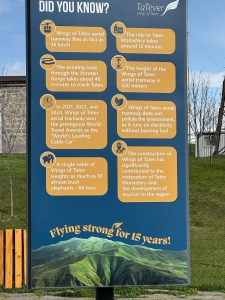
Off on a side road we go to the Wings of Tatev. This is a 3.5 mile long cable car that crosses to valley to the town on the other side. This holds the Guinness Record for the longest cable car across a single expanse. We catch the first ride of the day along with a few other folks. The car goes a max speed of 36 km/h. The car holds 25-30 people with all standing. The crossing takes about 15 minutes.
Rode to the valley
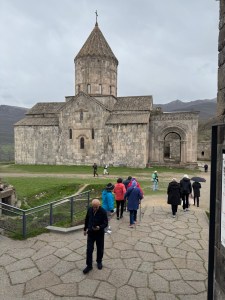
We proceed to walk to the Tatev Monastery. Today is Sunday and people are coming to receive a blessing from the priest. He is very popular with locals and other Armenians. A military post is nearby and several of them are visiting as well. Several vendors are open selling souvenirs and food items. A couple of puppies are playing near the vendors.
Tatev Monastery
By the way many dogs run free and don’t belong to anyone. Many have a tag in their ear which means they have had their shots and have been neutered or spayed. We were told it was safe to pet them but not necessarily the best thing to do.
About the cable car
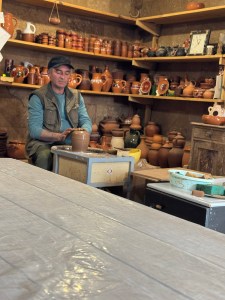
We rode the cable car back to get on the bus. We are headed to a pottery maker to see his craft and to have lunch at his home. He makes most of the pottery for the village in the traditional way. The garage has been converted to his studio. The walls are lined with shelves containing pieces for sale. Some have been glazed and some not. He had a very interesting salt container. It is made to represent a woman. The vessel has two arms, seven hair braids and a heart. After watching him shape several pieces we went upstairs to have lunch. His wife and some helpers prepared the meal. She is the art teacher in the high school. She has also written a small cookbook.
Potter
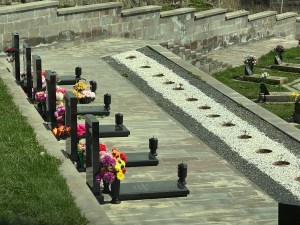
The bus is parked adjacent to the war cemetery. All the graves here are men killed in war. The grave stones are black and have the man’s picture. A small vessel is for flowers and another to burn incense. The cemetery is arched and made of terraces.
War cemetery
We drove through an area where Molokan people live. Our guide says they are similar to Amish people. They don’t embrace technology or modern conveniences. They are very honest hard working people. They are great project formen because they are very good with time lines and budgets. Molokans believe in the equality of all people, and reject church hierarchy and veneration of icons. They place emphasis on Lent and Easter, the latter of which is the main event in Molokan religious observance. They orginated in Russia and have remained loyal to Russia.
Caravan lodge
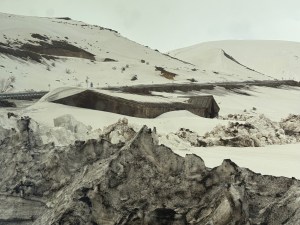
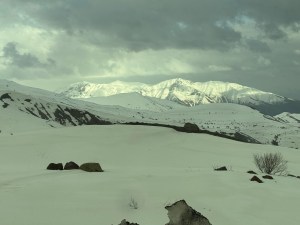
We continued our drive up the mountain. Everything but the road is snow covered. We came to a small turn out. A short distance away buried in the snow is a caravan lodge. This would have housed caravans traveling through the area on the Silk Road. It was difficult to see because it is built into the mountain and covered with snow. A few of the brave members of the group walked down the path to take a look. The snow walls on either side were as tall as them. The weather was raining and miserable. Connie stayed in the bus but Rob went. The structure was dark inside so not much to see.
Mountain pass
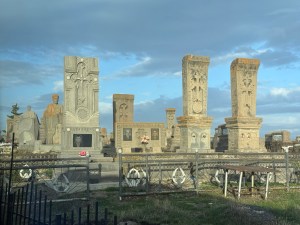
Back down in the valley we stopped for a break at a cemetery with some old graves as well as new ones. The grave stones are quite large usually.
Old cemetery
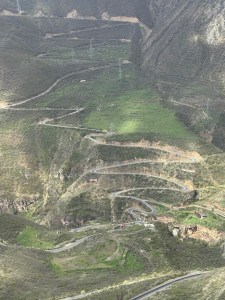
The mountain roads today were not for the faint of heart. Glad motion sickness was not a concern. The roads are two lanes wide with no shoulders. The turns are tight especially for the bus. You really wonder why there aren’t more accidents. Really glad they didn’t have snow on them. You can understand why they don’t do tours in the winter.
Our hotel is out of town. We were told you could take a hike in the time between arrival and dinner. Just be sure to get on the correct trail. The bears are out of hibernation and are in the area. I don’t think anyone went for a hike.
Today we leave Yerevan for southern Armenia and later to northern Armenia. Only a total of five hours of driving today. They do a good job of breaking the day up so you are not on the bus too long.
Khor Virap Monastery
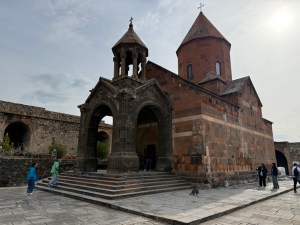
The first sight is Khor Virap Monastery. Just like most monasteries it sits up on a hill. Khor Virap’s notability as a monastery and pilgrimage site is attributed to the fact that Gregory the Illuminator was initially imprisoned here for 13 years by King Tiridates III of Armenia. Saint Gregory subsequently became the king’s religious mentor, and they led the proselytizing activity in the country. In the year 301, Armenia was the first country in the world to be declared a Christian nation. A chapel was initially built in 642 at the site of Khor Virap as a mark of veneration to Saint Gregory. Over the centuries, it was repeatedly rebuilt. In 1662, the larger chapel known as the “St. Astvatsatsin” (Holy Mother of God) was built around the ruins of the old chapel, the monastery, the refectory and the cells of the monks. Regular church services are held in this church. It is one of the most visited pilgrimage sites in Armenia. The setting is impressive with Mount Ararat in the distance.
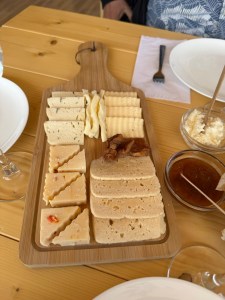
Cheese samples
Off we go for a wine and cheese tasting. The valley has lots of vineyards. The view of Mount Ararat is impressive. We have been very lucky to see it so well. We arrived at a small family run cheese producer. They must not be too small because they produce 23 kinds of cheese and sell to numerous Armenian stores plus export to California. By the way the Los Angeles area has a very large Armenian population. They have purchased wine locally so we get some of each. The cheese is mild compared to some countries but delicious. We especially liked the one with dill. We also got a glimpse inside their cheese factory. It wasn’t running today unfortunately. They only make one kind of cheese on a given day. The type depends on the makeup of the milk they receive. Yesterday they also sold all the cheese they had made. They have a small orchard on the property too.
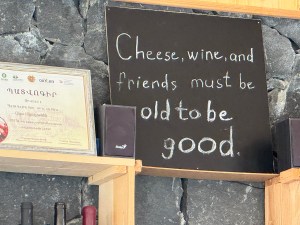
Sign at cheese factory
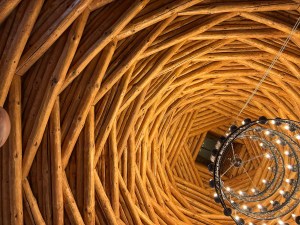
Lunch was bbq chicken that was really smokey. They put the pieces on a stick and place it in the wood oven that is also used to make bread. Connie would liked to have eaten much more but she was too full. The roof of the dining room was criss crossed logs giving a very unique look.
Restaurant ceiling
We drove past a large cave where archaeologists found proof of early wine making from beginning to end. Some groups were visiting the site but not us. Just as well the climb didn’t look very appealing.
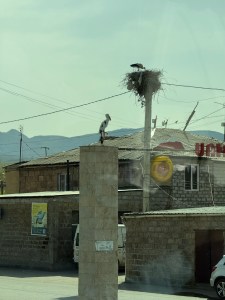
Stork on nest
A couple of the small towns had lots of stork nests. They were everywhere. Hundreds of them nest here every year.
The nearby canyon was very beautiful with high walls and a river at the bottom. Those trying to use the bus’s internet were out of luck.
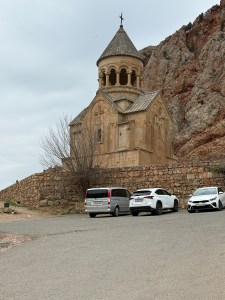
Noravank Monastery
The next stop was Noravank Monastery which is a 13th-century Armenian monastery, located 122 km from Yerevan in a narrow gorge made by the Amaghu River. The gorge is known for its tall, sheer, brick-red cliffs, directly across from the monastery. The monastery is best known for its two-storey Surb Astvatsatsin (Holy Mother of God) Church, which grants access to the second floor by way of a narrow stone-made staircase jutting out from the face of the building.
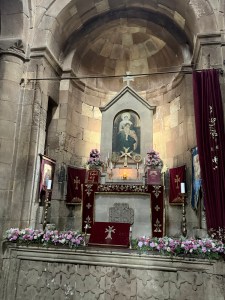
Inside the chapel
Before arriving at our hotel we stopped where we could see across to caves on the opposite side of the canyon. Many of these are still used today by local families for storage to include cars. The rock pillars are similar to those in Turkey just not as many nor as colorful.
Connie making baklava
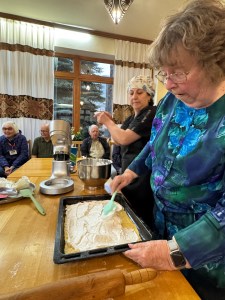
Before dinner Connie and Karen helped make baklava with the hotel chef. Quite fun if you like that sort of thing. Dinner in the hotel was great as usual and the baklava was finished by the end of dinner.
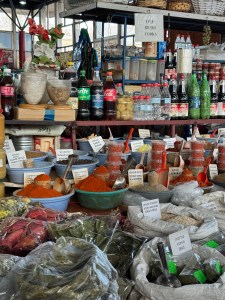
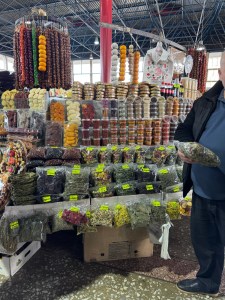
We start today at the produce market which has lots more food than just produce. Once again we are early so some of the vendors are not open. The market is indoors and this time of year there are no flies. The smell is good too. The meat counters even look clean and fresh. Everything is arranged so beautifully. They have many items we do not. This is especially true for fruits and vegetables.
In the marketMore market
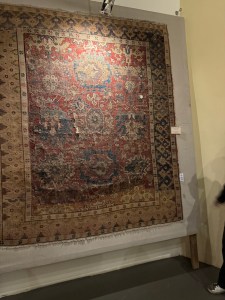
Now its off to Megerian Carpet Manufacturers. This is one of the old families that continues to make carpets in the original way. They tie a double knot unlike some companies. Therefore they think their carpets will last longer. We watched some ladies working in the factory. What a slow process even though they are fast. A large carpet with two ladies working on it can still take several months. The museum there contains some very old carpets. One of those had been cut in half when the family members were deported. Fifty years later they managed to run into each other. At least one person in our group bought a small carpet.
Old carpet
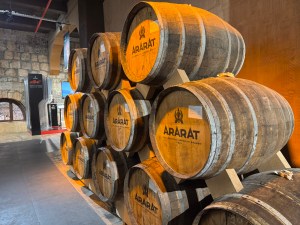
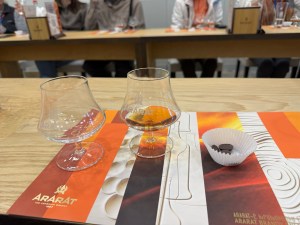
Next stop was the Yerevan Ararat Brandy Distillery. It was founded in 1877. Quite the facility. One room has barrels of brandy with the names of governmental officials who have visited the distillery. None of them were Americans. We sampled 3 and 7 year old brandies. They sell some that is aged for 20 years. An Armenian tradition is to buy a bottle of 20 year old brandy when a baby is born. The baby’s name is put on the bottle and when they marry the brandy is served. Our guide was quite surprised to learn her folks had such a bottle with her name on it. So many guests came when she married.
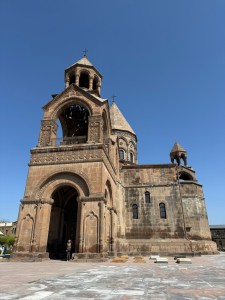
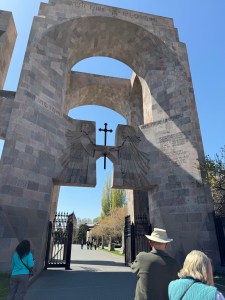
Barrels of brandySeven year brandy in the glassEtchmiadzin CathedralEntrance to church complex
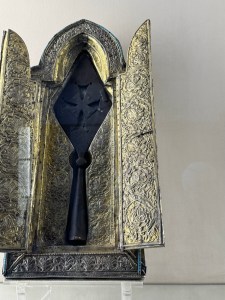
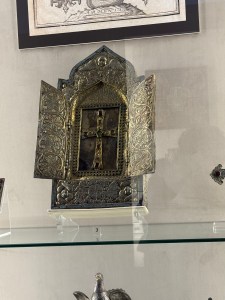
After lunch we visited Etchmiadzin Cathedral which is the mother church of the Armenian Apostolic Church. It was built between 301 and 303 by Armenia’s patron saint Gregory the Illuminator. The cathedral is located in the administrative headquarters of the Armenian Apostolic Church. Within the grounds is a school and seminary. In another building baptisms are performed. Numerous people were there dressed very nicely for baptisms. Inside the cathedral Is the treasury where numerous significant items are kept. Two of these are a piece of Noah’s Ark and the sword that pierced Jesus’s side.
Tip of the spear that pierced Jesus’s sidePiece of Noah’s Ark behind the cross
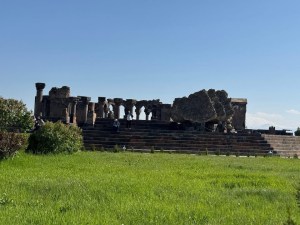
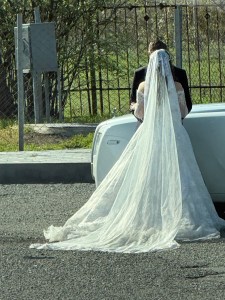
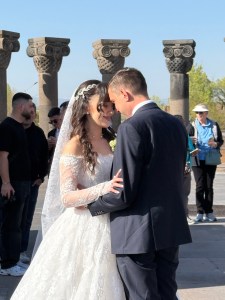
The last stop of the day was Zvartnots Cathedral, a 7th-century Armenian cathedral located near Vagharshapat, Armenia. It is a UNESCO World Heritage Site, renowned as a masterpiece of early medieval Armenian architecture. The cathedral was constructed between 641 and 661 but was destroyed by a powerful earthquake in the 10th century. A bride and groom were having photos taken at the site. Her dress and veil were both very long and getting dirty dragging on the ground. It was rather funny watching them trying to get all of that in the car for the get away photos.
Zvartnots Cathedral
Dinner was on our own tonight. We ended up walking a short distance down the street to a Wendy’s that had only recently opened. It was extremely busy. Tasted pretty much like home. We should have counted the number of food delivery guys picked up orders. It’s a Friday night and the streets are full of people and cars.
Today we ventured out a short distance from the city. As we drove out of the city you could see the still existing Soviet era buildings and then the new structures in the suburbs. The rental price for the new buildings is significantly higher plus you would have a longer commute. The Soviet buildings are in sad shape.
We stopped briefly for another photo opportunity of Mount Ararat. Today is even better than yesterday. The mountain is quite beautiful.
Entrance to cave church complexSouthern entrance Inside one of the chapels
We are headed for UNESCO-listed Geghard Monastery, located about 40km (approx. 1 hour) east of the capital in the Azat Valley. Founded in the 4th century, the complex is renowned for its structures carved directly into the surrounding solid rock cliffs, featuring stunning ancient Armenian architecture. The site consists of a main church, a narthex, and two main cave churches entirely carved inside the mountain. Originally founded by Gregory the Illuminator in the 4th century, the present-day structures date back to the 12th-13th centuries. The name Geghard means lance or spear referring to the spear that allegedly wounded Jesus at the crucifixion which was housed here for centuries. At least two other spears exist. All were brought together for testing. The general consensus was that the one located in Armenia is the most likely to be authentic. The pillars and arch ways inside the church are amazing. In one of the rooms a natural spring comes out of the rock. Many believe it has healing powers. A choir of two men and two women sang for us inside one of the areas. The songs were from the 12th century. The acoustics made it sound like a large choir.
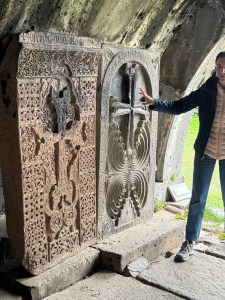
Along the walk up to the entrance are reproductions of some of the grave markers called cross stones here. They all had some form of a cross. The most popular being the Armenian blooming cross which is a intricately decorated cross symbolizing the Resurrection of Christ, eternal life, and faith. Unlike the crucifix, it signifies life-giving power rather than death, often featuring sprouted, leafy branches and intricate, floral patterns.
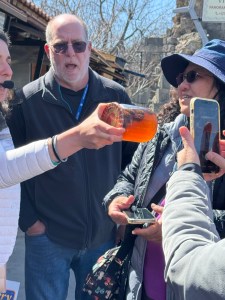
A few vendors are at the bottom when we returned. We were the first bus on the site which was really nice because we had the location to ourselves most of the time. The vendors were selling two common food items. One was fruit leathers of various flavors. The second was a traditional candy made by dipping walnut halves threaded on a string into a thick, spiced grape syrup. Often referred to as “Armenian Snickers,” this chewy treat is a staple on Armenian festive tables, particularly during New Year and Christmas. Even though this is a sweet, by our standards it isn’t very sweet. We all got to sample both.
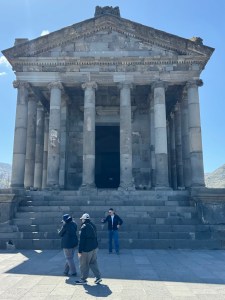
Pagan templePickled pine cones
Then we were off to the Greco-Roman temple of Garni. This is the only in tact Pagan temple in the country. It sits in a beautiful park with cherry trees lining the walkway. The trees are in bloom so lots of pictures being taken. Below in the canyon a river is flowing. Everything in the area is green. It was built in the first century. An earthquake in 1679 destroyed it, but in the 1970’s it was restored. A Christian church was built next to it in medieval times which was completely destroyed by earthquake later. A palace had existed once but very little if anything remains. The Roman bath house is still basically intact. A mosaic is still visible but in bad shape. We were treated to a traditional flute concert by a local musician. The flute was played more like an oboe.
From here we walked to lunch. Unfortunately for us we missed one of the turns to the lunch site. We knew about where it was because of the location of the bus. Rob finally asked in what we thought was tourist information. They called around and found where we should have been. We missed the demonstration of bread making and about half of the meal time. Well at least we are back with the group. Similar salads and grilled trout.
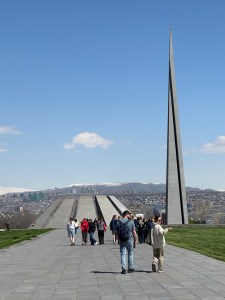
Part of Genocide Museum
We returned to the city and visited the Genocide Museum. Neither of us had any idea this was going on. About 1.5 million Armenians were killed during the genocide. The genocide occurred around 1915. The complex consists of a circular structure with eternal flame inside, a tall column representing the rebirth of the country and the institute. The institute studies genocides wherever they have occurred. Many displays of the events involved the the Armenian genocide. Very sobering experience.
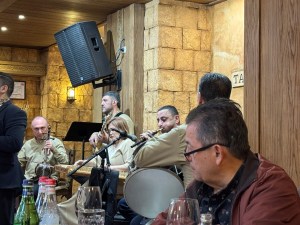
Local band
Later that evening we took the optional tour to dinner and a folk music and dance event. The band consisted of drum, guitar, local flute, the Kanin large, trapezoidal plucked string typically features 72 strings arranged in sets of three, laid across the lap with harp like sound and the kamancheh a small, bowed string instrument with a spike fiddle featuring a spherical, resonant body. The dancers were in costume. The dances are very energetic and the music was loud. Our beef stew turned out to be lamb but still good. A little girl about 2-3 loved dancing to the music.